

Myanmar Resistance Leader Surrenders to Military After Clashes With Rival Forces
Introduction
A senior leader of an independent resistance faction in Myanmar has surrendered to the country’s military authorities following violent clashes with rival anti-junta forces. The development highlights deepening divisions within the armed resistance movement that has been fighting military rule since the 2021 coup.
The surrender of Bo Nagar, leader of the Burma National Revolutionary Army (BNRA), marks a significant and symbolic moment in Myanmar’s ongoing civil conflict. Sagaing Region, where his group operated, has long been a central battlefield in the country’s resistance war.
Background: Myanmar’s Post-Coup Conflict
Myanmar has been engulfed in conflict since February 2021, when the military overthrew the elected government led by Aung San Suu Kyi. Peaceful nationwide protests were met with lethal crackdowns, pushing thousands of civilians to join armed resistance movements.
Sagaing Region quickly became a resistance stronghold. Local militias, ethnic armed groups, and People’s Defense Force (PDF) units mobilized against military forces. However, as the resistance movement expanded, coordination challenges and disputes over authority emerged.
Who Is Bo Nagar?
Bo Nagar, also known as Naing Lin, rose to prominence during the early stages of armed resistance. He initially led a locally formed guerrilla group called the Myanmar Royal Dragon Army, which cooperated with the opposition’s shadow government.
In September 2023, he reorganized his force under a new name — the Burma National Revolutionary Army (BNRA). The restructuring reportedly loosened formal ties with the National Unity Government (NUG) and the PDF network.
Bo Nagar’s group became influential in central Sagaing but also controversial.
The Immediate Trigger: Clashes With the PDF
Tensions between BNRA fighters and local People’s Defense Force units had reportedly been building for months. Allegations surfaced that BNRA members were operating unauthorized road checkpoints and extorting money.
The conflict escalated dramatically when a dispute over weapons reportedly led to the fatal shooting of a PDF member by BNRA fighters. In response, PDF units launched raids on BNRA positions.
What had been simmering friction turned into open confrontation.
The Surrender
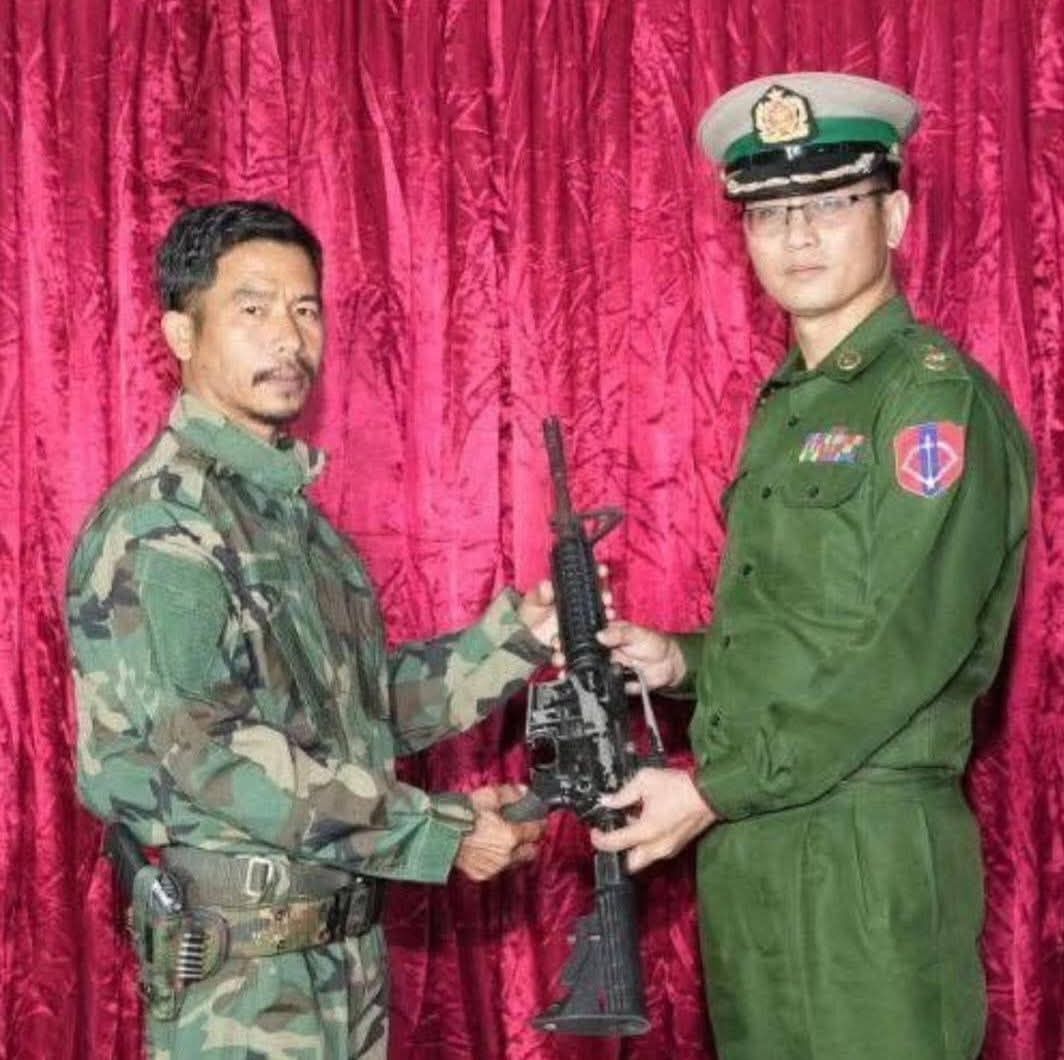
According to state-run media, Bo Nagar and several family members contacted military authorities in Pale Township, Sagaing Region, to “return to the legal fold.”
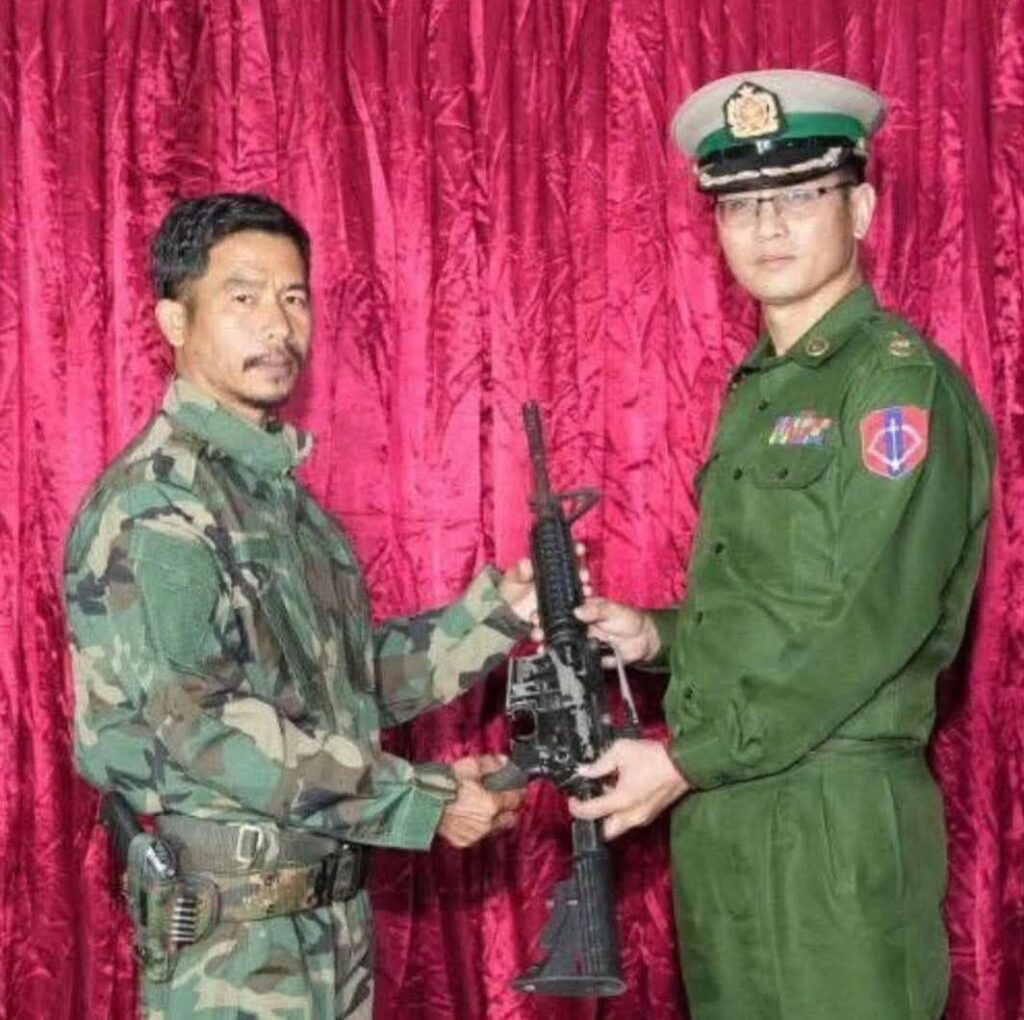
Photographs published by state outlets showed him surrendering firearms. Independent reports indicated that military helicopters transported him and relatives from his stronghold.
The military stated that individuals who surrender would receive assistance and potential cash incentives for weapons turned in — a strategy frequently used to encourage defections.
Allegations and Counterclaims
The National Unity Government claimed that the conflict stemmed from BNRA members refusing to cooperate with investigations into alleged criminal activity.
These allegations reportedly included:
- Killing of PDF members
- Sexual violence
- Child abuse
- Other criminal offenses
NUG officials stated that approximately 150 BNRA members had agreed to integrate with PDF forces after the clashes.
Bo Nagar has not made public statements since entering military custody.
What This Means for the Resistance Movement
Bo Nagar’s surrender exposes a fragile reality: Myanmar’s armed resistance is not a unified structure. While all factions oppose military rule, ideological, territorial, and administrative disagreements persist.
Key issues include:
- Command structure disputes
- Accountability mechanisms
- Territorial control
- Resource management
- Criminal allegations within armed groups
Fragmentation weakens the resistance’s ability to coordinate large-scale operations and may create opportunities for military authorities to exploit divisions.
Sagaing: A Strategic Battlefield
Sagaing Region has witnessed intense fighting since 2021. It is geographically strategic due to:
- Proximity to key trade routes
- Agricultural significance
- Strong anti-military sentiment
- Local militia mobilization
Multiple resistance groups operate there, sometimes overlapping in influence and territory.
The surrender of a prominent commander from this region sends shockwaves through resistance networks.
The Military’s Strategic Advantage
The military has consistently attempted to divide opposition forces through:
- Amnesty offers
- Financial incentives
- Propaganda campaigns
- Psychological operations
Publicizing high-profile surrenders serves to project an image of weakening resistance unity.
Whether Bo Nagar’s surrender significantly shifts battlefield dynamics remains uncertain.
Broader Implications
This development could have several consequences:
- Increased mistrust among resistance factions
- Stricter internal discipline within PDF units
- Possible restructuring of command oversight
- Greater scrutiny of independent armed groups
- Expanded military recruitment efforts targeting defectors
The long-term impact will depend on how both the NUG and other resistance leaders respond.
Conclusion
The surrender of Bo Nagar underscores a critical challenge facing Myanmar’s anti-military resistance: internal cohesion.
While the movement continues to resist military rule across large parts of the country, fractures and disputes threaten operational unity. As the conflict evolves, maintaining discipline, accountability, and coordination among resistance groups will be crucial.
Myanmar’s civil war remains complex — shaped not only by the confrontation between military and opposition forces, but also by internal tensions within the resistance itself.
Frequently Asked Questions (FAQ)
1. Who is Bo Nagar?
Bo Nagar is a resistance commander from Sagaing Region who led the Burma National Revolutionary Army (BNRA).
2. Why did he surrender?
He reportedly surrendered after clashes with rival People’s Defense Force units and amid allegations of misconduct within his group.
3. What is the BNRA?
The Burma National Revolutionary Army is an independent resistance group operating in Sagaing Region.
4. What is the People’s Defense Force (PDF)?
The PDF is an armed network aligned with the National Unity Government, formed after the 2021 military coup.
5. What is the National Unity Government (NUG)?
The NUG is a shadow government formed by elected lawmakers removed during the 2021 coup.
6. Does this weaken the resistance movement?
It exposes divisions, but the broader resistance remains active across multiple regions.
7. Where is Sagaing Region?
Sagaing is an upper-central region of Myanmar and has been a major resistance stronghold since 2021.