



4
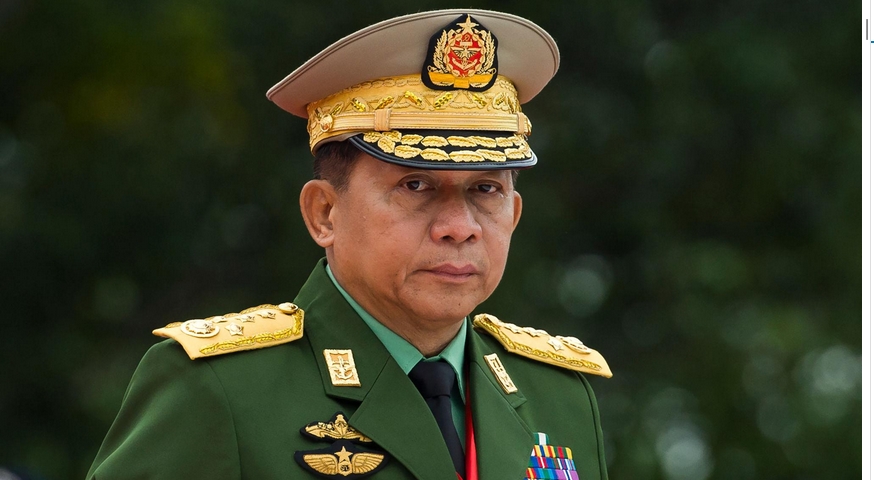
Myanmar’s military leader, Min Aung Hlaing, has long been at the center of the country’s turbulent political landscape. Recent reports from military sources suggest that the Senior General may be preparing to step down as Commander-in-Chief and assume the presidency, potentially consolidating his authority through constitutional mechanisms.
Such a move would represent a significant shift in Myanmar’s post-coup governance structure and could further reshape the country’s fragile political environment.
Background: Commander-in-Chief Since 2011
Min Aung Hlaing has served as Commander-in-Chief of Myanmar’s armed forces (Tatmadaw) since 2011, when he succeeded Senior General Than Shwe. Over more than a decade, he has maintained firm control over the military establishment and expanded his influence across political institutions.
Under the 2008 Constitution—drafted by the military—the Commander-in-Chief plays a dominant role in national security and politics. The military is constitutionally guaranteed 25% of parliamentary seats, giving it effective veto power over constitutional amendments.
2021 Coup and Political Consolidation
On February 1, 2021, just hours before the newly elected parliament was set to convene, the military seized power, detaining State Counsellor Aung San Suu Kyi and other leaders of the National League for Democracy (NLD).
The coup followed the NLD’s landslide victory in the 2020 general election. Military officials claimed widespread voter fraud, though independent observers found no conclusive evidence of systemic irregularities.
Many political analysts argue that the coup was partially driven by Min Aung Hlaing’s long-standing presidential ambitions. According to insiders, he had reportedly sought accommodation with the NLD leadership prior to the coup but failed to secure political guarantees.
Reports of a Leadership Transition
Recent reports indicate that Myanmar’s current foreign minister, Than Swe, informed foreign counterparts that a new commander may soon replace Min Aung Hlaing. Military insiders claim discussions about his transition to the presidency are “very much on.”
Under the 2008 Constitution:
- The Commander-in-Chief is appointed by the President upon recommendation of the National Defence and Security Council (NDSC).
- The President cannot simultaneously hold another official position.
If Min Aung Hlaing seeks the presidency, he would need to formally retire from the armed forces and appoint a successor as Commander-in-Chief—likely a trusted loyalist to ensure continuity of military influence.
The Role of the USDP and Parliament
The military-backed Union Solidarity and Development Party (USDP) has historically functioned as the political arm of the armed forces.
In previous elections, particularly in 2010, the USDP formed a government under former general Thein Sein, who oversaw limited political reforms and initiated engagement with Western nations.
Following the recent military-organized elections—widely criticized by opposition groups and international observers—pro-military forces reportedly secured overwhelming parliamentary representation. Parliament is expected to convene in March to elect a president, with a new government anticipated to take office in April.
If confirmed, this would open the door for Min Aung Hlaing’s formal transition from military supremo to civilian president.
Union Consultative Council and Governance Structure
Earlier this year, the junta established a new governing body known as the Union Consultative Council to oversee transitional administration. Political observers believe Min Aung Hlaing may chair this council as part of a broader strategy to institutionalize his authority.
By moving into the presidency, he could:
- Legitimize his rule under constitutional procedures
- Appoint a trusted successor as Commander-in-Chief
- Fill the cabinet with loyalists
- Maintain indirect military dominance over state institutions
This would mirror the 2011 transition, when Than Shwe stepped aside and Thein Sein became president while preserving military influence behind the scenes.
Impact on Armed Resistance
Myanmar remains engulfed in conflict following the 2021 coup. Ethnic armed organizations and newly formed People’s Defence Forces continue to challenge military authority across multiple regions.
The opposition National Unity Government (NUG), formed by elected lawmakers removed in the coup, has rejected the military-organized elections and vows to intensify efforts to dismantle junta rule.
If Min Aung Hlaing assumes the presidency, it may:
- Harden resistance movements
- Intensify armed conflict
- Deepen international isolation
- Complicate diplomatic engagement
Many rebel groups have stated they will escalate operations should military consolidation continue.
Constitutional Constraints and Political Calculations
The 2008 Constitution presents both opportunity and constraint.
While it provides a legal pathway for Min Aung Hlaing’s presidential transition, it also prohibits the president from holding concurrent positions. Therefore, his retirement from the military would be necessary—at least formally.
The key question remains whether real power would shift or simply be redistributed within a tightly controlled military network.
Historical Parallels: 2011 Transition
The transition from Than Shwe to Thein Sein in 2011 was framed as a move toward “disciplined democracy.” Although political space briefly expanded, the military retained decisive influence.
A similar pattern could emerge if Min Aung Hlaing:
- Steps down as Commander-in-Chief
- Installs a loyal successor
- Assumes the presidency
- Governs through allied institutions
Such a strategy would maintain continuity while offering the appearance of constitutional legitimacy.
International and Regional Implications
Myanmar’s political future remains closely watched by neighboring countries and global powers.
- ASEAN has struggled to mediate the crisis.
- Western governments have imposed sanctions.
- Regional powers monitor stability concerns along border areas.
Any formal shift in leadership structure may influence diplomatic engagement strategies, but significant policy change appears unlikely without broader political reconciliation.
Conclusion
Min Aung Hlaing’s reported presidential ambitions reflect a long-term strategy to consolidate authority within Myanmar’s military-dominated political framework. Whether this transition materializes or not, the country remains deeply divided, with armed conflict ongoing and opposition forces rejecting military rule.
If he does assume the presidency, the move may solidify his control—but it is unlikely to resolve the underlying political crisis gripping Myanmar since the 2021 coup.
The coming months, particularly parliamentary developments in March and April, will be critical in determining the next chapter of Myanmar’s governance.
Frequently Asked Questions (FAQ)
1. Why would Min Aung Hlaing seek the presidency?
He has long been rumored to harbor presidential ambitions and may view the role as a way to legitimize his authority under constitutional procedures.
2. Can he remain Commander-in-Chief while serving as president?
No. The 2008 Constitution states that the president cannot hold other official positions simultaneously.
3. Who would replace him as military chief?
A successor would likely be a senior, trusted military figure aligned with his policies.
4. How has the opposition responded?
The National Unity Government and ethnic armed groups have rejected military-led elections and vowed continued resistance.
5. Will this transition stabilize Myanmar?
Most analysts believe it would consolidate power but not necessarily reduce conflict or restore democratic governance.
6. What role does the USDP play?
The Union Solidarity and Development Party serves as the military’s political proxy and may facilitate parliamentary approval of leadership changes.