

China Emerges as the Real Winner Behind Myanmar’s Junta Elections
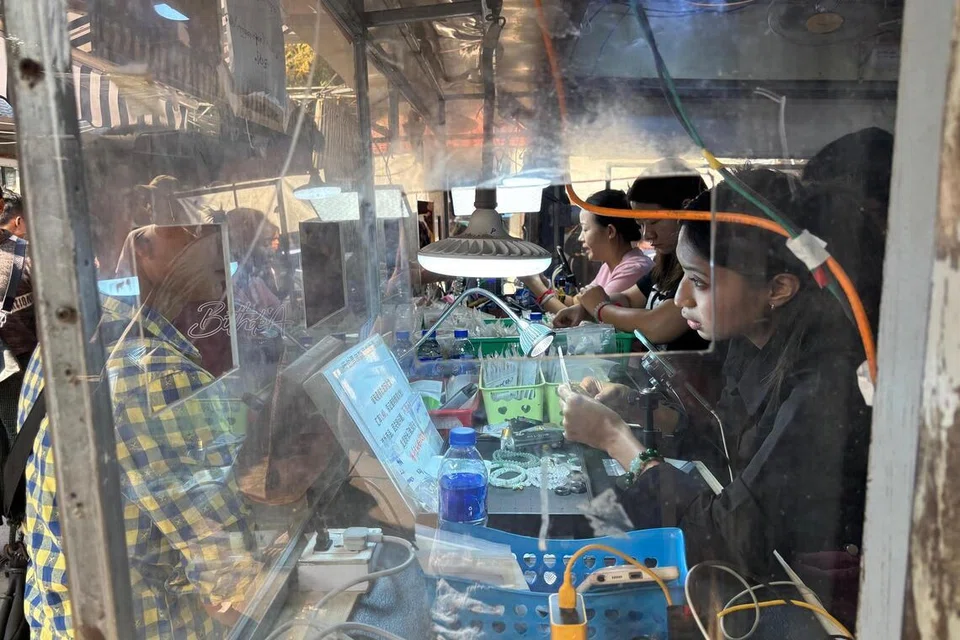
At Mandalay’s bustling jade market, traders crowd around counters as Chinese brokers shine LED torches through stones, livestreaming purchases to buyers back home. On the surface, business appears brisk. Yet beneath the hum of commerce lies a country fractured by civil war and an election widely dismissed as a façade.
As Myanmar’s military junta presses ahead with a multi-phase general election, analysts say the most significant beneficiary may not be the ruling generals, but China, whose strategic, economic and geopolitical interests are increasingly shaping the country’s future.
💎 Trade Continues Amid Conflict
Mandalay has long been Myanmar’s commercial gateway to China. Jade from Kachin State, prized for its quality, still flows across the border, albeit under far more dangerous conditions. Since the military coup in February 2021, armed conflict involving ethnic resistance groups has repeatedly disrupted the overland trade corridors linking Myanmar to China.
The challenges intensified further after a 7.7-magnitude earthquake in March 2025 struck Sagaing, compounding logistical difficulties and highlighting the fragility of infrastructure along key supply routes.
Despite this, Chinese traders remain deeply embedded in Myanmar’s jade economy, often reselling stones in real time via Chinese e-commerce platforms. Their presence underscores Beijing’s enduring economic footprint, even as Myanmar’s domestic economy deteriorates.
🗳️ Elections as a Stability Signal
Jade traders and business intermediaries express cautious hope that Myanmar’s ongoing election, concluding with its final phase on Jan 25, could bring a degree of stability—particularly if China acts as a diplomatic guarantor.
Beijing has actively encouraged the junta-held polls, seeing them as a pathway toward restoring a semblance of legitimacy to Myanmar’s military leadership and securing the conditions necessary for uninterrupted cross-border trade.
🇨🇳 Beijing’s Strategic Interests
China’s motivations are far-reaching. The country holds multi-billion-dollar infrastructure investments in Myanmar, including:
- Oil and gas pipelines
- Highway networks
- The China-Myanmar Economic Corridor (CMEC)
- A stalled deep-sea port project in Rakhine State offering access to the Indian Ocean
In addition, Myanmar has quietly become China’s largest external supplier of rare earth elements, crucial to global electronics, renewable energy technologies, and advanced military systems.
These minerals travel along the same conflict-scarred routes as jade, making security and stability in northern Myanmar essential to Beijing’s global supply chain dominance.
⚖️ Legitimacy Over Democracy
Analysts say China’s backing of the elections is not about democratic reform, but managed legitimacy.
“China wants the military to pivot into something internationally presentable,” said Jason Tower, senior expert at the Global Initiative against Transnational Organised Crime. “It wants stability that favours its economic projects.”
China views junta leader Senior General Min Aung Hlaing as a workable partner, despite his international isolation. According to analysts, Beijing is actively working to tilt the balance of power in his favour while avoiding total regime collapse.
🚫 A Widely Rejected Vote
Myanmar’s election has been condemned internationally as a sham. Vast areas of the country remain outside junta control, millions of displaced citizens are unable to vote, and major political parties—including the National League for Democracy (NLD)—have been dissolved or banned.
UN Special Rapporteur Tom Andrews called on the international community to “utterly reject” the vote, describing it as “military rule dressed up in civilian clothing.”
Official figures show declining voter turnout, particularly in urban centres such as Yangon, reinforcing doubts about public participation and legitimacy.
📉 Military Power, Political Control
Despite low turnout, the military-backed Union Solidarity and Development Party (USDP) has already secured a parliamentary majority before the final voting phase. The junta has portrayed the process as a success, even as independent observers report sparse polling activity.
In December, the junta criminalised opposition to government-approved projects—widely interpreted as a move to shield Chinese-backed megaprojects from protest.
🔄 China’s Strategic Pivot
China’s current stance marks a shift from its initial response to the 2021 coup. While Beijing did not support the coup outright, it became increasingly concerned as instability threatened its investments and border security.
In 2023, China tacitly allowed a major rebel offensive targeting scam centres linked to transnational crime. But when junta losses mounted and regime collapse appeared possible, Beijing recalibrated.
“Regime collapse was the worst outcome for China,” said International Crisis Group adviser Richard Horsey.
🤝 Diplomatic Re-engagement
High-level diplomatic engagement followed:
- Chinese Foreign Minister Wang Yi visited Naypyitaw in August 2024
- Min Aung Hlaing attended summits in Kunming, Moscow, and Beijing
- China brokered ceasefires and territorial handovers in northern Myanmar
With China’s signal, other regional powers—including India and ASEAN members—resumed cautious engagement with Myanmar’s military leadership.
🌍 Rare Earths: The Silent Driver
China’s reliance on Myanmar’s rare earth deposits is central to its strategy. Myanmar supplies over half of China’s rare earth imports, and in tight years, more than 90%.
Extraction occurs mainly in Kachin and Shan states, regions shaped by weak central authority and armed group control. The trade benefits multiple actors—miners, militias, brokers—before crossing into China, where value multiplies dramatically.
📉 Demand Still Dictates Outcomes
Despite hopes for stability, traders in Mandalay acknowledge that Myanmar’s fate is often decided elsewhere.
“The biggest problem is still falling demand from Chinese buyers,” said a jade trader from Henan province. Economic slowdown in China continues to dictate prices and volumes more than political developments in Myanmar.
❓ FAQs (5–7)
1. Why is China seen as the winner of Myanmar’s elections?
China gains stability for trade routes, rare earth supplies, and infrastructure projects without requiring democratic reform.
2. Does China support Myanmar’s military junta?
China supports regime stability rather than the coup itself, prioritising strategic and economic interests.
3. Why are the elections considered illegitimate?
Large parts of the country cannot vote, major parties are banned, and conflict persists nationwide.
4. What is the China-Myanmar Economic Corridor?
A network of infrastructure projects linking China to the Indian Ocean through Myanmar.
5. Why are rare earths important?
They are critical for electric vehicles, renewable energy, electronics, and military technology.
6. How does instability affect trade?
Conflict disrupts transport routes essential for jade and rare earth exports to China.
7. Will the elections bring peace?
Analysts say the vote may stabilise junta control but will not resolve Myanmar’s underlying conflict.