

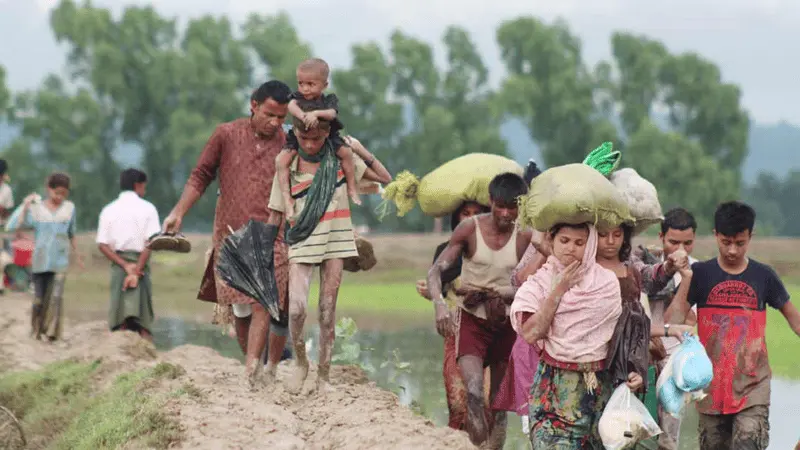
Bangladesh Rejects Myanmar Claims on Rohingya Identity
Bangladesh has strongly rejected Myanmar’s recent submissions to the International Court of Justice (ICJ), accusing Naypyidaw of distorting history and denying the identity of the Rohingya people by referring to them as “Bengalis.” Dhaka said such claims undermine the Rohingya’s right to self-identification and attempt to justify atrocities committed during the 2016–17 violence in Myanmar’s Rakhine State.
In a statement issued by Bangladesh’s Ministry of Foreign Affairs, the government called on Myanmar and authorities in Rakhine State to demonstrate a genuine commitment to recognising the Rohingya as an integral part of Myanmar’s society and state. It urged Myanmar to create a conducive environment for their safe, voluntary, and dignified return, ensuring full reintegration with equal rights.
“The Government of Bangladesh calls upon Myanmar and others having authority over Rakhine to demonstrate a genuine commitment to the recognition of Rohingya as an integral part of their society and State,” the statement said.
🇧🇩 Bangladesh Rejects “Bengali” Label
Bangladesh said Myanmar’s portrayal of the Rohingya as illegal migrants before the ICJ is a deliberate effort to reinforce a false narrative of internal security threats. According to Dhaka, such arguments are aimed at diverting international attention away from atrocity crimes committed against the Rohingya population.
The government emphasised that the Rohingya are a distinct ethnic group with deep historical roots in Arakan (present-day Rakhine State), predating modern national borders and the region’s incorporation into the Barman Kingdom in 1785.
Historical records, colonial-era demographic accounts, and independent academic research all document the long-standing presence of Rohingya communities in the region, Bangladesh noted.
📜 Historical Roots of the Rohingya
Bangladesh highlighted that the term “Rohingya” evolved historically from Rohang or Mro-Haung, the former capital of the Arakan Kingdom. Over time, the term was adopted by the community as a form of self-identification, particularly as systematic marginalisation intensified within Myanmar.
Attempts to portray the Rohingya as foreigners or recent migrants are inconsistent with historical facts, the statement said, adding that such narratives contradict both scholarly evidence and Myanmar’s own past acknowledgements.
🗳️ Citizenship and Political Exclusion
According to Bangladesh, the Rohingya were once an integral part of Myanmar’s political and social life. This changed drastically following the enactment of Myanmar’s 1982 Citizenship Law, which excluded them from citizenship on ethno-religious grounds.
Despite increasing discrimination, Rohingya retained limited political rights, including voting, until they were fully disenfranchised during Myanmar’s 2015 general elections. Bangladesh said this marked a critical step in the systematic removal of their civil and political status.
🚨 2016–17 Violence and Mass Displacement
Bangladesh stated that Myanmar’s continued denial of constitutional guarantees to the Rohingya culminated in mass expulsions during the 2016–17 military operations in Rakhine State. These actions forced more than 700,000 Rohingya to flee to Bangladesh, rendering the community effectively stateless.
Dhaka described the process as a planned campaign to destroy the Rohingya community, pointing to patterns of violence, displacement, and denial of identity.
⚖️ Identity, Self-Determination, and International Law
The foreign ministry said systematically labeling the Rohingya as “Bengalis” denies their inherent right to self-identify and has long been used to justify exclusion, persecution, and ethnic cleansing.
Bangladesh noted that Myanmar itself had previously recognised the Rohingya as “lawful residents of Burma” in the 1978 bilateral repatriation agreement between the two countries. Similar assurances were given in later accords, including commitments to reintegrate returning Rohingya.
🤝 Failed Repatriation Efforts
Despite bilateral agreements signed in 2017 and 2018, Bangladesh said Myanmar has failed for more than eight years to create conditions in Rakhine State that would allow for the safe, voluntary, and dignified return of Rohingya refugees.
This prolonged inaction, Dhaka warned, may indicate an intention to permanently destroy the community by preventing their return and reintegration.
🗓️ Dispute Over 1971 Claims
The Bangladeshi government also recalled its formal protest on July 18, 2023, against Myanmar’s claim that half a million Bangladeshis took refuge in Rakhine during Bangladesh’s 1971 Liberation War.
Bangladesh said there is no documentary, demographic, or historical evidence to support the allegation, describing it as another attempt to rewrite history and undermine Bangladesh’s position.
🌍 Regional and International Implications
Bangladesh currently hosts more than one million Rohingya refugees, primarily in camps in Cox’s Bazar. Dhaka has repeatedly said the prolonged crisis poses serious humanitarian, environmental, and security challenges and requires a sustainable political solution in Myanmar.
The government reaffirmed its commitment to working with international partners, including the United Nations and the ICJ, to ensure accountability and justice for the Rohingya people.
❓ FAQs (5–7)
1. Why did Bangladesh reject Myanmar’s ICJ submission?
Bangladesh said Myanmar’s claims distort history, deny Rohingya identity, and attempt to justify atrocities committed during the 2016–17 violence.
2. Why does Myanmar call the Rohingya “Bengalis”?
Myanmar claims the Rohingya are illegal migrants from Bangladesh, a position Bangladesh and international scholars strongly dispute.
3. Are the Rohingya historically from Rakhine State?
Yes. Historical records and academic research show Rohingya communities lived in Arakan long before modern borders existed.
4. What role did the 1982 Citizenship Law play?
The law excluded Rohingya from citizenship, stripping them of legal status and fundamental rights in Myanmar.
5. Has Myanmar ever recognised the Rohingya?
Yes. Myanmar recognised them as lawful residents in the 1978 repatriation agreement and later bilateral accords.
6. Why has repatriation not happened?
Bangladesh says Myanmar has failed to ensure safety, rights, and dignity in Rakhine State for returning refugees.
7. What is Bangladesh asking Myanmar to do now?
Bangladesh urges Myanmar to recognise Rohingya identity, restore rights, and create conditions for safe and voluntary return.