

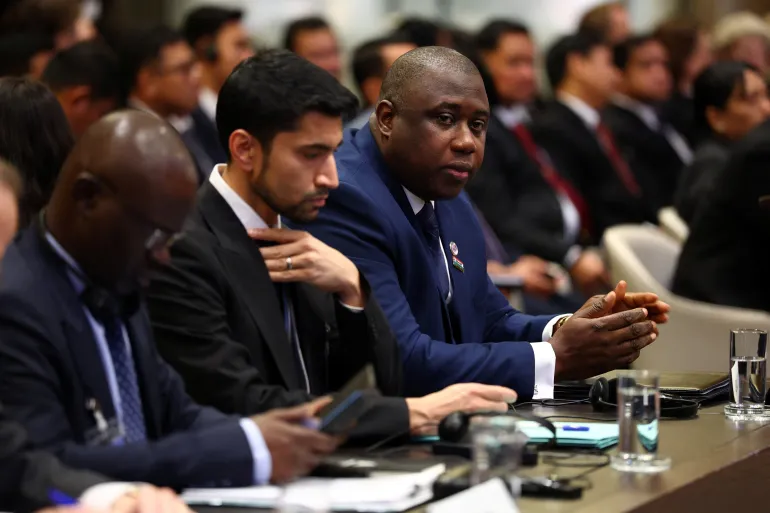
In a moment that reshaped international human-rights law, The Gambia—a small West African nation—took Myanmar to the International Court of Justice (ICJ) over alleged genocide against the Rohingya. The case is extraordinary not only because of the gravity of the allegations, but because The Gambia is not a directly affected state. Instead, it invoked the principle that genocide is a crime against humanity as a whole—one that any state party to the Genocide Convention has a duty to prevent and punish.
This article explains why The Gambia brought the case, what it argues at the ICJ, how Myanmar has responded, and why the outcome matters far beyond Myanmar’s borders.
A Landmark Case at the World’s Highest Court
The case opened a new chapter in international law. For the first time, the ICJ is deciding a genocide claim brought by a third country acting in defense of another people, not its own citizens. When The Gambia’s attorney general invited Rohingya refugees in the Peace Hall to stand and be acknowledged by the judges, it underscored the moral weight of the proceedings.
Although the ICJ cannot enforce judgments with police power, its rulings carry immense legal and diplomatic authority. Provisional measures, compliance orders, and final judgments shape state behavior, sanctions, and future prosecutions in other international forums.
Why Is The Gambia Suing Myanmar?
1) A Legal Duty Under the Genocide Convention
The Gambia filed the case in November 2019, accusing Myanmar of breaching the 1948 Genocide Convention. The treaty obliges all signatories to prevent and punish genocide—regardless of where it occurs. By acting, The Gambia argued it was fulfilling a universal legal obligation, not intervening in another country’s domestic affairs.
2) Acting on Behalf of the Muslim World
As a member of the Organisation of Islamic Cooperation (OIC), The Gambia brought the case with political and financial backing from a bloc representing 57 states. The Rohingya are overwhelmingly Muslim, and their persecution resonated deeply across OIC member states.
3) A History That Shaped Its Resolve
The Gambia’s recent past also mattered. After decades under authoritarian rule, the country launched a truth-and-reconciliation process to confront grave abuses committed by former security forces. As Gambians reckoned with their own trauma, many leaders concluded that human rights are universal—and silence in the face of mass atrocities elsewhere is unacceptable.
4) Leadership and Moral Courage
The initiative’s architect, former attorney general Abubacarr Tambadou, galvanized international attention by arguing that small states can—and must—stand up to powerful perpetrators when fundamental norms are violated.
What Exactly Is The Gambia Arguing?
At the ICJ, The Gambia alleges that Myanmar’s military—the Tatmadaw—acted with genocidal intent against the Rohingya, aiming to destroy the group in whole or in part. Its arguments rest on several pillars:
- Targeted violence: Testimony describes villages burned with civilians inside, mass shootings, systematic sexual violence, and forced displacement.
- Scale and pattern: United Nations investigators reported about 10,000 deaths and more than 730,000 people driven into neighboring Bangladesh during the 2016–2017 operations—figures consistent with a coordinated campaign rather than isolated abuses.
- Dehumanization: Lawyers cited official rhetoric portraying the Rohingya as “subhuman” or a threat—language that, in past genocide cases, has been used to infer intent.
- Erasure of identity: Denial of citizenship, restrictions on movement, and policies designed to remove Rohingya from Myanmar altogether, The Gambia argues, show an intent to destroy the group’s existence as a people.
Taken together, The Gambia says, these facts meet the legal threshold for genocide under international law.
How Has Myanmar Responded?
Myanmar has consistently rejected accusations of genocide and ethnic cleansing. In early hearings, its representatives argued that the military conducted lawful “clearance operations” against armed groups following attacks on security posts, and that any abuses were isolated or overstated.
In January 2020, however, the ICJ ordered provisional measures—an emergency directive requiring Myanmar to prevent acts that could amount to genocide and to preserve evidence. Legal experts called this a stinging rebuke, especially because Myanmar’s civilian leader at the time personally defended the country before the court.
Since the 2021 military coup, Myanmar’s junta has maintained its denial while simultaneously fighting multiple internal rebellions—complicating compliance with international rulings but not diminishing the court’s authority.
Who Are the Rohingya—and Why Are They So Vulnerable?
The Rohingya are a predominantly Muslim ethnic group from Myanmar’s western Rakhine State. Despite centuries of presence, the government refuses to recognize them as one of the country’s official ethnic groups, branding them “illegal migrants.” As a result:
- They are stateless, denied citizenship and basic civil rights.
- Laws restrict their movement, education, and access to healthcare.
- Periodic violence has punctuated decades of discrimination, culminating in the mass expulsions of 2016–2017.
Today, hundreds of thousands live in overcrowded camps in Bangladesh’s Cox’s Bazar, dependent on humanitarian aid that has been repeatedly cut. Attempts to flee by sea remain perilous, with frequent reports of capsized boats and mass casualties.
Why This Case Matters Globally
1) Precedent for Universal Accountability
If the ICJ affirms jurisdiction and rules on the merits, it strengthens the idea that no state is beyond legal scrutiny for genocide—regardless of geopolitics.
2) Implications for Other Cases
Legal scholars note potential ripple effects for other high-profile genocide proceedings, including cases brought by third states invoking universal obligations.
3) Empowering Smaller States
The Gambia’s action demonstrates that size and power are not prerequisites for leadership in international justice. Moral clarity, coalition-building, and law can amplify even the smallest voices.
4) Recognition for Victims
For Rohingya survivors, being heard at the world’s highest court is itself a form of recognition—an official acknowledgment that their suffering matters under international law.
What Happens Next?
The ICJ will deliberate after hearing both sides. A final judgment could take years. While enforcement relies on political will, past cases show that ICJ rulings influence sanctions, diplomatic isolation, and future criminal prosecutions.
Regardless of timing, the case has already altered the landscape: it has kept global attention on the Rohingya, pressured Myanmar to respond to legal scrutiny, and reinforced the principle that genocide concerns all humanity.
Frequently Asked Questions (FAQ)
1) Why can The Gambia sue Myanmar if it isn’t directly affected?
Because genocide is prohibited under international law, any state party to the Genocide Convention can bring a case to enforce its obligations.
2) What court is handling the case?
The case is before the International Court of Justice, the United Nations’ principal judicial organ.
3) Can the ICJ enforce its rulings?
The ICJ has no police force, but its judgments carry significant legal and political weight, often shaping sanctions and international pressure.
4) Has the court already ruled?
The court has issued provisional measures ordering Myanmar to prevent genocidal acts and preserve evidence. A final ruling is still pending.
5) How many Rohingya were displaced?
Approximately 730,000–750,000 fled Myanmar during the 2016–2017 military operations, primarily to Bangladesh.
6) Does this case affect other genocide claims globally?
Yes. Experts believe it could influence how third states bring genocide cases in the future and how courts interpret universal obligations.
7) What does The Gambia want as an outcome?
A legal declaration that Myanmar breached the Genocide Convention and orders requiring compliance, prevention, and accountability.
8) Why is this case symbolically important?
It shows that even small nations can uphold international law and defend vulnerable peoples when powerful actors fail to act.